

Previous
Previous
If you’re serious about keeping your vehicle looking sharp in Long Beach, CA, you’ve probably come across ceramic coating. It’s one of the most talked-about forms of paint protection—but also one of the most misunderstood.
This guide breaks it down clearly: what ceramic coating actually is, what it does (and doesn’t do), and how it compares to other options like paint protection film (PPF).
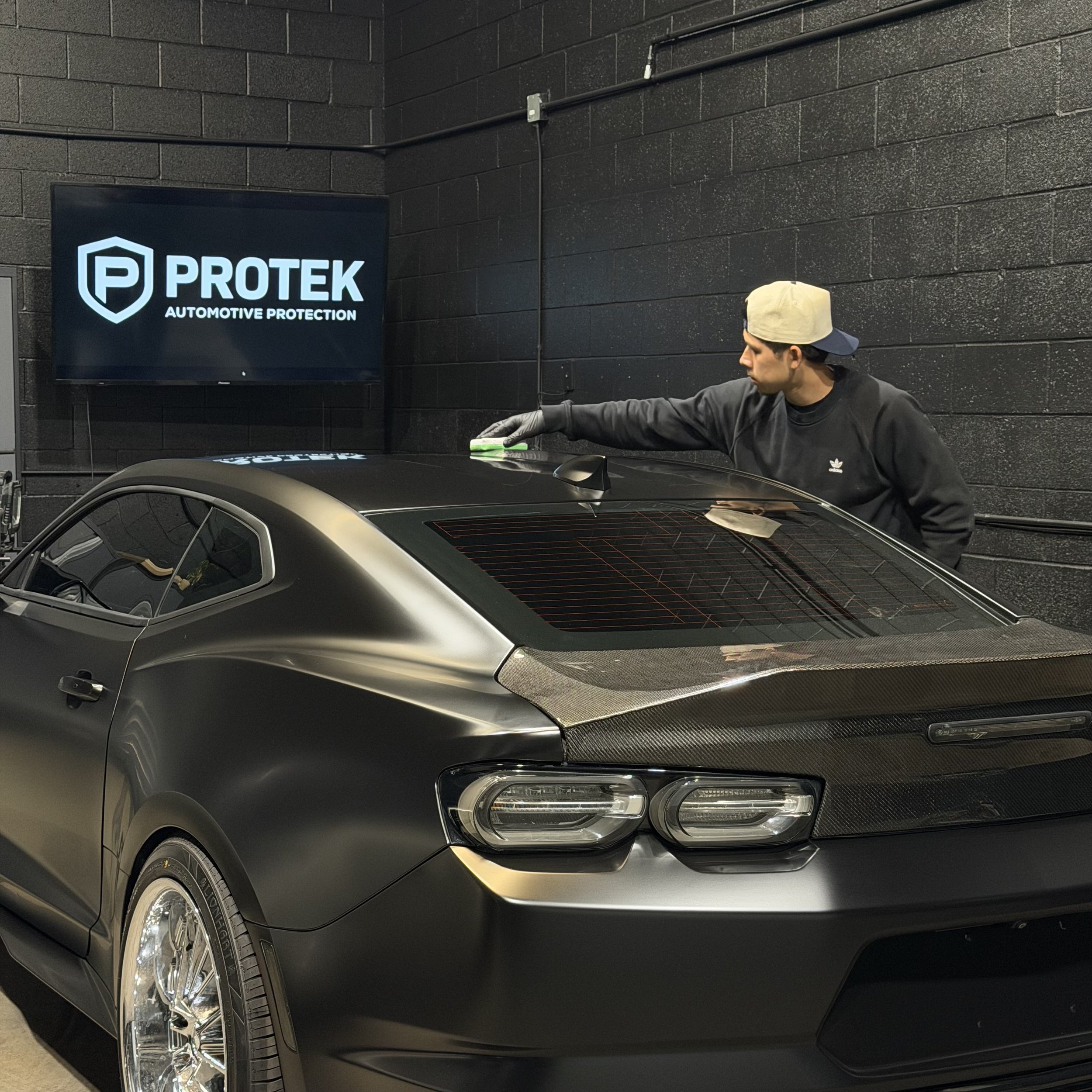
Ceramic coating is a liquid polymer applied to your vehicle’s exterior surfaces. Once cured, it chemically bonds with the paint, creating a durable, protective layer.
Unlike waxes or sealants that sit on top of the paint and wear off quickly, ceramic coatings are semi-permanent. They’re designed to enhance gloss while adding a level of protection against environmental damage.
At its core, ceramic coating is about long-term surface protection and easier maintenance—not a temporary shine.
There’s a lot of misinformation around what ceramic coatings can do. Let’s keep it real.
What it does well:
UV protection: Helps reduce oxidation and fading, which is especially important in Southern California sun
Hydrophobic properties: Water beads and rolls off, taking dirt with it
Chemical resistance: Protects against contaminants like bird droppings, bug splatter, and light water spotting
Enhanced gloss: Deepens the clarity and reflectivity of your paint
What it does NOT do:
It does not prevent rock chips
It does not make your car scratch-proof
It does not eliminate the need for proper washing
Think of ceramic coating as a protective layer that makes ownership easier, not invincibility for your paint.
This is where a lot of first-time customers get stuck.
Ceramic Coating
Best for: gloss, chemical protection, ease of cleaning
Thickness: extremely thin (microns)
Protection level: surface-level
Paint Protection Film (PPF)
Best for: physical impact protection (rock chips, road debris)
Thickness: significantly thicker
Protection level: absorbs damage before it hits your paint
If you drive regularly on the freeway around Long Beach or Southern California, PPF is what protects against rock chips. Ceramic coating complements it by making the surface easier to maintain and enhancing appearance.
A lot of enthusiasts choose both—PPF on high-impact areas and ceramic coating over everything.
One of the biggest mistakes people make is focusing only on the coating product—not the preparation.
Before applying ceramic coating, the paint should be properly corrected. This process, known as paint correction, removes swirl marks, light scratches, and imperfections.
Why does that matter?Because ceramic coating locks in whatever is underneath it.
If the paint has defects, they’ll still be there—just shinier.
A proper process usually includes:
Deep decontamination wash
Clay treatment
Machine polishing (paint correction)
Skipping prep might save time upfront, but it compromises the final result.
For most car owners in this area, the answer is yes—if your expectations are aligned with reality.
Long Beach conditions include:
Strong UV exposure
Coastal moisture and salt in the air
Frequent dust and environmental fallout
Ceramic coating helps reduce the wear from these factors and makes regular maintenance much easier. If you’re someone who values a clean, well-kept vehicle—or you’re thinking about long-term resale—it’s a solid investment.
That said, it’s not for everyone.
If you’re looking for protection from rock chips, you’ll want to consider paint protection film (PPF). If you just want a temporary shine, a traditional detail may be enough.
Ceramic coating isn’t magic—but when applied correctly on properly prepared paint, it’s one of the most effective ways to maintain your vehicle’s finish over time.
The key is understanding what it’s designed to do:
Protect against environmental damage
Enhance appearance
Simplify maintenance
If you approach it with that mindset, you’ll get real value out of it.
If you’re in Long Beach, CA and want to learn more about ceramic coating—or how it pairs with services like paint correction, PPF, or window tint—you can reach Protek - Automotive Protection at (562) 239-6550 or send us an email.