
How Long Does Ceramic Coating Actually Last? 1-Year, 3-Year & 5-Year Coatings Explained
If you've been researching ceramic coating for your vehicle, you've probably come across coatings advertised to last one, three, five, or even more years. But what do those numbers actually mean? And is a five-year ceramic coating really going to protect your paint for five full years?
The answer isn't as straightforward as the label suggests.
Ceramic coating longevity depends on several factors, including the coating's formulation, installation quality, driving conditions, and how well the vehicle is maintained. A coating advertised to last five years won't necessarily outperform a three-year coating if it isn't properly installed or maintained.
At Protek Automotive Protection in Santa Fe Springs, CA, we believe understanding what you're paying for is just as important as the protection itself.
Let's break down the differences between one-year, three-year, and five-year ceramic coatings so you can make an informed decision.
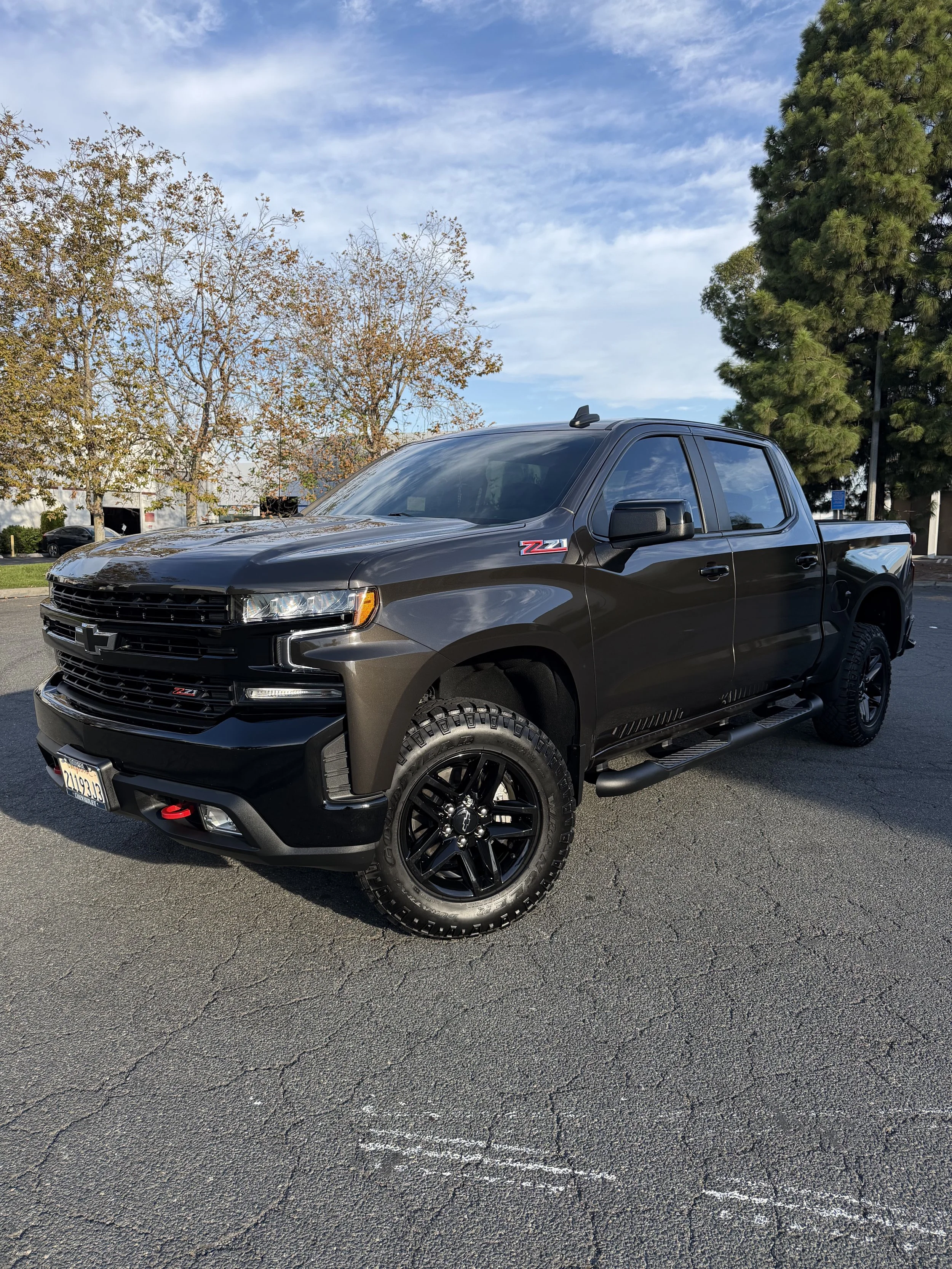
2024 Chevy Silverado (after a 3 year ceramic coating has been applied)
What Determines How Long a Ceramic Coating Lasts?
Before comparing different coating durations, it's important to understand what affects their lifespan.
Ceramic coatings create a chemically resistant, hydrophobic layer over your vehicle's clear coat. This layer helps protect against environmental contaminants, makes cleaning easier, and helps maintain your paint's appearance.
However, ceramic coatings aren't permanent.
Several factors influence how long a coating remains effective:
1. Coating Formulation
Not all ceramic coatings are created equally. Different formulations have varying levels of chemical resistance, durability, and bonding characteristics. A coating's advertised lifespan is generally based on the manufacturer's testing or recommended conditions.
2. Surface Preparation
Proper preparation is essential. Before applying ceramic coating, the paint needs to be thoroughly cleaned and decontaminated. Depending on its condition, paint correction may also be recommended to remove imperfections before sealing the surface.
3. Maintenance Habits
Regular washing with appropriate automotive cleaning products helps preserve the coating. Harsh chemicals, improper washing techniques, and neglected contamination can reduce its effectiveness.
4. Environmental Exposure
Southern California presents its own challenges. Constant UV exposure, freeway driving, dust, road grime, and outdoor parking can all contribute to coating wear.
A vehicle parked in a garage and driven occasionally will generally experience different conditions than a daily driver parked outside in Santa Fe Springs.
1-Year vs. 3-Year vs. 5-Year Ceramic Coatings: What's the Difference?
The biggest difference between these coatings is their intended durability, but longer doesn't automatically mean better for every vehicle.
1-Year Ceramic Coatings
One-year coatings are typically designed for shorter-term protection.
They can provide hydrophobic properties, improved gloss, and easier maintenance without committing to a longer-duration coating.
Best suited for:
Leased vehicles approaching their return date
Owners planning to sell or trade their vehicle
Drivers wanting to experience ceramic coating before choosing a longer-term option
A one-year coating can be a practical choice when long-term ownership isn't part of the plan.
3-Year Ceramic Coatings
Three-year coatings are generally positioned as a middle ground between short-term protection and longer-lasting durability.
Depending on the formulation, they may offer greater resistance to environmental exposure and chemical wear than shorter-duration alternatives.
Best suited for:
Daily-driven vehicles
Owners planning to keep their cars for several years
Drivers seeking longer-term protection with regular maintenance
For many Southern California drivers, a three-year coating offers a reasonable balance between intended longevity and ownership plans.
5-Year Ceramic Coatings
Five-year coatings are designed for extended protection, but their actual performance still depends heavily on maintenance and environmental conditions.
Some longer-duration coatings use different chemical formulations or application systems to achieve their intended durability.
However, a five-year rating should never be interpreted as five years of maintenance-free protection.
Best suited for:
Long-term vehicle owners
Enthusiasts focused on preserving paint condition
Owners willing to maintain their coating consistently
It's also worth remembering that a five-year coating doesn't automatically provide better scratch resistance than a three-year coating.
Ceramic coating is not a substitute for paint protection film (PPF) when protection against rock chips and physical impacts is the priority.
Does Ceramic Coating Really Last as Long as Advertised?
Here's something many vehicle owners misunderstand: a coating's advertised lifespan is not a guarantee of identical performance throughout that entire period.
A five-year ceramic coating may still be present on your paint after several years, even if its water-beading behavior has noticeably declined.
That's because hydrophobic performance and coating durability aren't exactly the same thing.
Over time, contaminants such as mineral deposits, road film, and environmental fallout can accumulate on the coating's surface. This buildup may reduce water beading without necessarily indicating that the coating has completely failed.
In some cases, proper decontamination can restore noticeable hydrophobic performance.
However, actual coating degradation can also occur, particularly when a vehicle experiences harsh conditions or improper maintenance.
This is why judging a ceramic coating solely by how aggressively water beads isn't always accurate.
Another important consideration is warranty coverage. Some manufacturers require specific maintenance procedures or periodic inspections to maintain warranty eligibility.
Before choosing a coating, understand exactly what its advertised lifespan and warranty cover.
How to Make Your Ceramic Coating Last Longer
Regardless of whether you choose a one-year, three-year, or five-year coating, proper maintenance plays a major role in its longevity.
A few habits can help preserve its performance:
Wash regularly: Remove dirt, road grime, and environmental contaminants before they accumulate.
Use proper washing techniques: Quality wash mitts, clean microfiber towels, and suitable automotive shampoos help reduce unnecessary wear.
Avoid harsh chemicals: Strong cleaners used incorrectly can negatively affect coating performance.
Address contamination early: Water spots, bird droppings, and other deposits shouldn't be left sitting on the surface.
Follow maintenance recommendations: Different coatings may have specific care requirements.
For vehicles exposed to Southern California's sun and daily freeway driving, consistent maintenance is especially important.
It's also worth understanding that ceramic coating doesn't eliminate the need for washing, prevent all scratches, or make paint immune to damage.
Its primary benefits are easier cleaning, chemical resistance, and helping preserve your vehicle's finish.
Choosing the Right Ceramic Coating in Santa Fe Springs, CA
Ultimately, the best ceramic coating isn't necessarily the one advertised to last the longest. It's the one that matches your vehicle, driving habits, ownership plans, and maintenance expectations.
A properly maintained three-year coating may be a better investment for some drivers than a neglected five-year coating.
At Protek Automotive Protection, we believe vehicle protection starts with understanding your options.
If you're considering ceramic coating in Santa Fe Springs, CA, and want to learn more about protecting your vehicle's finish, we're here to help.
Call (562) 239-6550 or visit protekceramic.com to learn more about ceramic coating and automotive paint protection.
