
What Is Paint Correction? A Clear Explanation for Car Owners
If your car’s paint looks dull, hazy, or covered in light scratches, you’re not alone. This is one of the most common issues we see from vehicle owners in Long Beach, CA—especially those who regularly go through automatic car washes or use improper washing techniques.
The solution most people hear about is paint correction, but there’s a lot of confusion around what that actually means.
This guide breaks it down in a straightforward way so you understand what paint correction is, what it does, and whether your vehicle actually needs it.
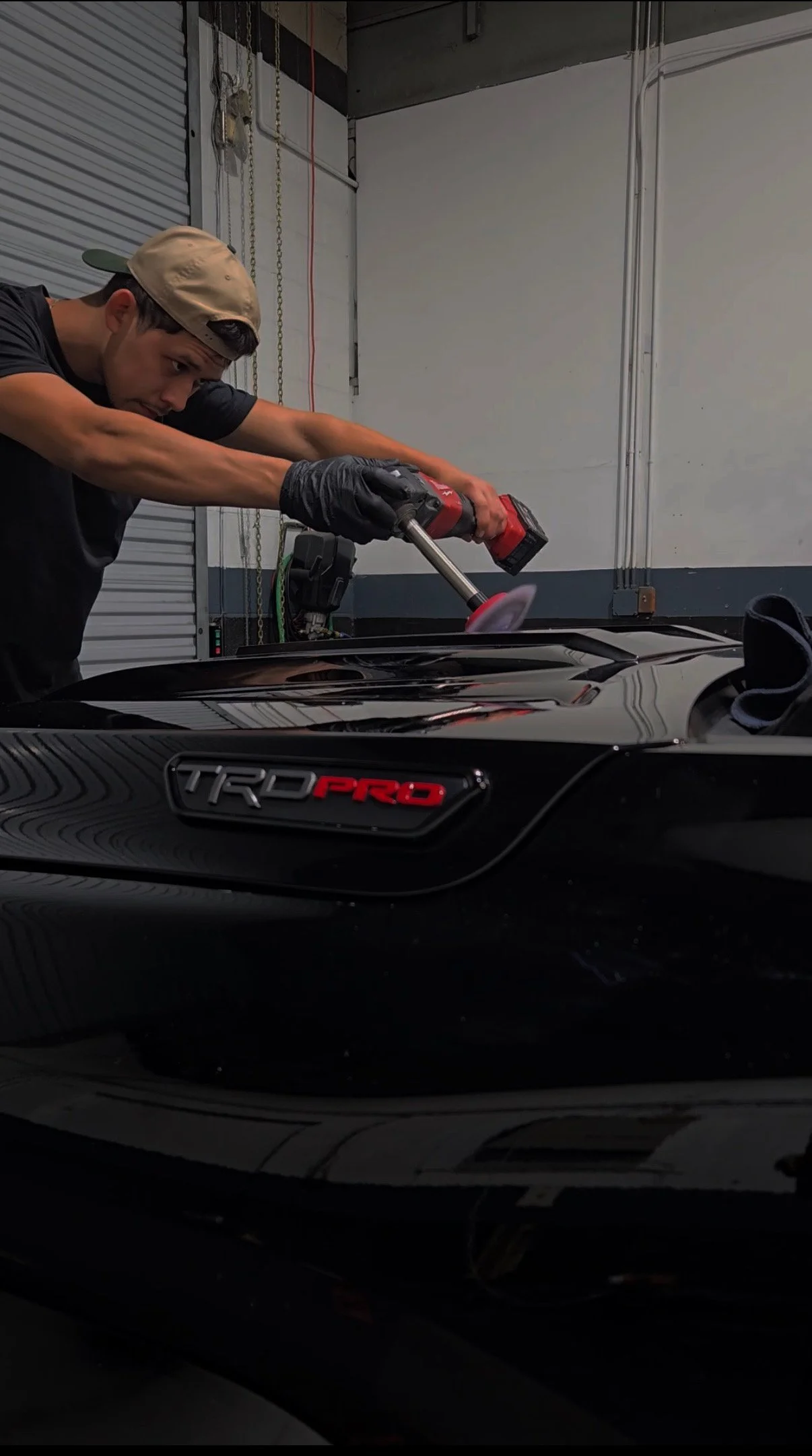
What Is Paint Correction?
Paint correction is the process of removing imperfections from your vehicle’s clear coat through machine polishing.
These imperfections include:
Swirl marks
Light scratches
Oxidation
Water spots
Holograms (buffer trails)
Instead of covering up defects, paint correction physically levels the surface by removing a very thin layer of the clear coat. This restores clarity, depth, and gloss.
It’s important to understand: this is not the same as a basic wash or wax. It’s a controlled, technical process that permanently improves the condition of your paint.
Why Do Cars Need Paint Correction?
Even newer vehicles often need paint correction.
That’s because paint damage doesn’t just come from age—it comes from improper contact and environmental exposure.
Common causes include:
Automatic car washes
Improper hand washing or drying
Dust and debris being wiped across the surface
UV exposure from the Southern California sun
Hard water spots and mineral deposits
In areas like Long Beach, CA, you also deal with coastal moisture, salt in the air, and consistent sun exposure—all of which accelerate paint degradation.
Over time, these factors reduce gloss and create that “swirled” or hazy look, especially noticeable on darker vehicles.
What Does the Paint Correction Process Involve?
Paint correction isn’t a single step—it’s a multi-stage process that depends on the condition of the vehicle.
1. Decontamination
Before any polishing begins, the paint is thoroughly cleaned to remove bonded contaminants.
This typically includes:
Deep wash
Chemical decontamination
Clay bar treatment
This step ensures the surface is completely clean so polishing can be done safely and effectively.
2. Paint Inspection
Every vehicle is different.
The paint is inspected under proper lighting to identify:
Depth of scratches
Severity of swirl marks
Areas that need more attention
This determines the level of correction required.
3. Machine Polishing
This is where the actual correction happens.
Using specialized machines, pads, and compounds, the surface is carefully polished to remove imperfections. Depending on the condition of the paint, this may involve:
Single-stage correction (lighter defects)
Multi-stage correction (heavier defects and deeper restoration)
The goal is always the same: maximize clarity while preserving as much clear coat as possible.
4. Refinement
After defect removal, the paint is refined to enhance gloss and eliminate any micro-marring left behind from the initial polishing stages.
This is what gives the paint that clean, reflective finish.
What Paint Correction Does (and Doesn’t Do)
There are a lot of misconceptions around this service, so let’s clarify.
What it does:
Removes swirl marks and light scratches
Restores gloss and depth
Improves overall paint clarity
What it doesn’t do:
It doesn’t fix deep scratches that go through the clear coat
It doesn’t prevent future damage on its own
It doesn’t add protection
Paint correction is about restoration, not protection.
What Comes After Paint Correction?
Once your paint is corrected, the next step is protecting that finish.
This is where services like ceramic coating or paint protection film (PPF) come in.
Ceramic coating helps protect against environmental contaminants and makes the vehicle easier to clean
PPF (paint protection film) adds a physical barrier against rock chips and road debris
Without protection, your paint will slowly begin to accumulate defects again over time.
Think of paint correction as resetting your paint—and protection as maintaining that reset.
Is Paint Correction Worth It?
If you care about how your car looks and want to maintain its value, paint correction is one of the most impactful services you can do.
It’s especially worth considering if:
Your paint looks dull or hazy
You see swirl marks in sunlight
You’re planning to apply ceramic coating or PPF
You want to bring your vehicle back to a cleaner, sharper finish
For many car owners in Long Beach and across Southern California, it’s the step that transforms how their vehicle looks—and sets the foundation for proper long-term protection.
Final Thoughts
Paint correction isn’t just about making a car look better—it’s about restoring the integrity of the paint surface.
Done properly, it removes years of damage caused by improper care and environmental exposure. But it’s also a process that requires skill, proper tools, and an understanding of how much clear coat can safely be removed.
If you’re considering ceramic coating or PPF, starting with properly corrected paint makes a significant difference in the final result.
To restore your vehicle’s finish or learn more about protecting it afterward, you can contact PROTEK Ceramic at (562) 239-6550 or get a quick estimate.
